
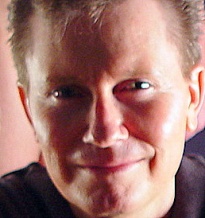
 Porter Anderson of Porter Anderson Media is a Fellow with the National Critics Institute, a producer and consultant formerly with the United Nations World Food Programme in Rome and INDEX: Design to Improve Life in Copenhagen. He’s worked in journalism throughout the changes of recent decades at the network of CNN, the Village Voice, and the Dallas Times Herald. Now recently he’s begun writing his cutting-edge “Writing on the Ether” column for writers every Thursday on the blog of former Writers Digest publisher Jane Friedman.
And today he’s going to take us diving deep beneath the wave of writing—to discover the real power and sinew of this craft we all love.
Porter, it’s delightful to have you here. You’ve been very supportive of me on Twitter for such a long time, but we’ve only recently gotten to know each other. And, I have to say, you write some of the most intelligent, hilarious emails I’ve ever received in my life!
Thanks, Victoria, and congratulations on releasing your new book. I’m sure it’s here somewhere under all this white lace. We’ll find it before we’re done, don’t worry. Go on with your questions, I’ll just be digging through this pile of doilies over here. . .
Thank you! And don’t worry about the doilies—we keep the wine in this bottle right here on the desk.
That’s a Montipulciano d’Abruzzo. How did you know? This lace is looking better by the minute.
[Laughing] We’re celebrating! You’ve got some big news today, right?
Right, and you’re the first to have this, Victoria.
Scoop!
I just finalized things last week in New York: I’m issuing the Porter Anderson Q2 Music Challenge Grant to support one of the most important developments in worldwide music today—and it’s a way I hope to introduce writers, including your readers, to one of the best daily companions they’ll ever find.
Have you ever heard of Q2? It’s @Q2Music to your Twitter friends. And online, Q2 Music lives here.
It’s a free 24-hour Internet stream that focuses on—ready for my favorite slogan?—”the fearless and relevant music you crave.”
 It’s really hard to jump with both feet into a writing career, without some palpable contact with the soul-reflective surfaces of art. I’m not arguing pop-vs.-literature. But if you want to rumble somebody’s world either in a pop or classical setting, then we’re talking vocabularies. The difference in knowing a few words or phrases of a language and being fluent in it are profound. And the more each of us who writes can grasp the muscular reach and breadth of artistic rigor, the better we become at the subtlest winks of rich writing.
Think of the most wicked film scoring you’ve ever heard. What today’s composers are doing—some of them actually in film—is what Q2 calls “living music.”
As in music-for-living, this is music that tells you something about your own life. Music that scores your characters’ lives in the bargain.
This is about the writer’s private world—as opposed to their public world, their published works. It’s the world of the act of creation. “What I’m listening to today.” I see it on agents’ blogs, too.
Most of these composers could no more write a book than you or I could write their concertos and tone poems. But the key is that they’re alive and working, they’re in the line at Starbucks, going for the same turnstile as you in the subway, trying to sort out software issues, putting on their pants one leg at a time. Not while they’re in the line at Starbucks. You know what I mean.
Seriously wasn’t going to ask. [Laughing]
As composer Grey McMurray put it recently on Q2, “Words are attempts to bridge the same gaps that music is attempting to meld.”
Yes. We’re all searching for a way to give expression to something that’s never before been expressed.
If Herr Beethoven were writing his 9th Symphony today, Frau Mixon, there’s every chance the “Ode to Joy” would be something different from what he wrote in 1824. And he’d get the planet-wide audience that Q2 is giving our composers today. Can you imagine what Mozart would have given for a way to have San Francisco hear the same music he was premiering in Vienna? Simultaneously?
So before I forget, the dates I want you to get down on that lacy calendar of yours, Victoria, are October 18 to 26. That’s when Q2 does only the second pledge drive it’s ever held. It’s that young.
And the Porter Anderson match will be the first challenge grant they’ve ever had.
Of course I’d really love it if writers felt they want to donate even a little bit—I’ll match them measure for measure—but I’m not pitching the pledge drive, I’m pitching new music for new writings: What I really hope to do with all this Q2-ing and fro-ing is get you and my other writing colleagues to listen.
Wonderful! Listening is actually a huge part of writing. I’ve seen novels dedicated to the albums that got the authors through them. There’s something about the link between the audible ambiance of your environment and hearing your characters’ voices.
I find that the last thing I need as a writer is “background music.” I actually need collaborative music. Something that gets me around emotional corners, explores dissonances with me, sorts out the rhythmic features of a character’s voice, and bolsters the complexity of a scene’s dynamics.
 The beauty of a writer’s relationship with composers is that we’re rolling on parallel tracks. We’re coursing through the same lush culture on mutually supportive trajectories. Because music is moving in another language, I can let it “speak” to me about one of my character’s despair or about one of my article’s key arguments, and no words get tangled up with mine. I’m still conversant in my own vocabulary, even while a composer carries on in hers or his.
Something a composer “says” in a piece of music can help me “hear” something I needed for a chapter or an essay, it can even get me up out of my seat and send me searching for the phrase I didn’t even know I needed.
Yes! This is the dedication to language that’s so important. So many new aspiring writers are simply unaware of the enormity of what they’re attempting. Writing is such a wonderful craft, but it’s not literary air-guitar.
Everybody realizes now, I hope, that the advent of the Internet has made what seems like entire municipal populations think they were born to write and be published. We’re lucky that the honkings and squealings of those AOL dial-ups didn’t sound like instructions from God to “Go forth and remove gall bladders” or “Render thy service, my child, as an air-traffic controller.”
[Laughing]
Surgery and aviation? Few people would dream of scrambling down their driveways to get into the nearest operating rooms and control towers.
Somehow, millions of people did hear, “Get thee to thy kitchen table and scratch out as many books as possible.” As you know from your work taking in literary laundry, an awful lot of folks are finding it much harder than they expected to go from notes to novel, from “all those great family Christmas letters” to genuine memoir.
One of the main things we admire in great literature is that it holds its own in the arts world, it exists in the context of “arts and letters.”
In E.M. Forster’s 1927 Clark lectures at Trinity College, Cambridge—which you can Whispersync onto your Kindle in a volume titled Aspects of the Novel—Forster said, “A novel is a work of art, with its own laws, which are not those of daily life, and…a character in a novel is real when it lives in accordance with such laws.”
That’s what learning to create great fiction is: learning what those laws are—really just the techniques for speaking to a reader in the ways they’re most able to hear—and developing your skills at playing with them. Have you ever dabbled in storytelling yourself?
I wrote a one-person play based on Bernard Shaw’s religious writings, his theory of “creative evolution.” The Shaw Estate licensed it through the Society of Authors in London and Dan Laurence had it entered into the permanent Shaw Archives, which was an amazing honor.
Shaw wasn’t just a playwright but also a novelist and, even more importantly, a critic. And working my way through his logic, it was obvious that the elegance with which he wrote about faith—and anything else, for that matter—was fundamentally a product of his own immersion in the arts.
You started your career in writing through a different art, didn’t you? Just as Flannery O’Connor developed her writing craft through her paintings.
You know, it’s been like falling up stairs for thirty years. I was an Equity actor at the Asolo in Sarasota when the New York Times bought the Sarasota Herald-Tribune.
In my day, we did a genuine English rotating repertory at our theater, three full productions running at a time. You pretty much looked at your costume to remember which show you were playing each matinee and evening. Tights: Othello. Spectacles: The Cherry Orchard. Tuxedo: Private Lives by Noel Coward, or maybe Tom Stoppard’s Travesties.
Imagine getting your Coward and Stoppard lines mixed up with the moment: “I have a memory like an elephant. In fact, elephants often consult me.”[—Coward]
“Don’t quibble, Sybil.”
In fact, one of the trickiest thinks about doing so many repetitions of these scripts in rotation is that the last joke you’ve heard can make it onstage.
The actor playing Cassio in Othello has a line to Iago about Othello’s lovemaking with his wife: “Make love’s quick pants in Desdemona’s arms.” Well, our actor in the role at the Asolo one afternoon had just been doing the usual wrong-way-to-say-it gag with the rest of us in the dressing room, heard his cue, walked into the scene onstage and said it: “Make love’s quick arms in Desdemona’s pants.” I actually think Shakespeare, or Edward de Vere, might have been tempted to revise if he’d heard it.
Went down like gangbusters in the mezzanine.
[Laughing]
To this day, I’m hooked on that awful moment in which you have the chance to “catch the conscience of the king.” To walk out onto a stage in the dazzle of stage light with hundreds of people waiting for nothing but what you’ll say and do? Such an exhilarating responsibility, I cannot tell you.
Frank Langella was talking about it recently on NPR’s Morning Edition with Scott Simon. Langella says his favorite description of the moment is “leap empty-handed into the void.” If you’re serious about the craft, that’s not overstating the risk-aversion you’re negotiating.
Exactly like the chance you have every time you go to the page—instead of the stage—to say something to your audience as a writer. Your readers are good enough to pause, to give you one precious, shuddering moment of their time.
You can either catch their conscience, seize them with a thought, grab onto them with those empty hands and arrest them with the sheer force of your mind’s beauty. Or you’ve lost them. Hesitate, and they’ll evap on you.
Oh, that gorgeous, earth-shaking first instant! Sometimes I get terrible stage fright on the page. Performing is even worse when the playwright doesn’t provide you with your words.
Or when your playwright provides you with lousy words. We won’t name names. Of course, I’d actually moved on to do something else, as all actors must do, to earn a living when the new administration at the Herald-Tribune asked if I’d like to try writing criticism. Huge boon for the audiences, of course, not to have to worry that I might turn up on stage again.
“I’m demonstrating the misuse of free speech. To prove that it exists.” [—Stoppard]
“Not to mention Darwin is different from the origin of the specious.”–that’s from Jumpers, not Travesties.
And so my start in journalism was as a critic and arts reporter at a succession of papers.
Tell us about professional criticism of the arts—that’s something about which aspiring writers are being taught really nothing these days.
Serious, legitimate criticism is fantastic training, especially in journalistic practice, because you’re paid to formulate and promulgate an informed opinion, which is not the job of standard reportage. It’s also not “Go” or “Don’t Go” stuff. That’s reviewing, a form of consumer guide, not authentic criticism.
In criticism, you leave it to the reader to decide for him- or herself. And you become extremely sensitive to fairness. I worked with some terrific people in the business, on the executive board of the American Theater Critics Association and as vice-president of the International Theater Critics Association. Covered both American and European theater. When I made the jump to the networks, the focus naturally went over to hard news. But I’ve never left criticism behind.
So that fortunate start—artful stumbling, really—was a double blessing. One: It gave me my entry into journalism via criticism; and two: it gave me my entry into writing via the arts. I came to this career through writing as an art.
Porter, what’s your take on the future of literature?
I guess I’m hoping that our suddenly bigger writing community doesn’t fall into the entertainment trap that’s so badly diminished journalism. A penny dreadful will always have its place.
But there’s nothing sadder than a writer who never tries to work in deeper water, at least once.
Know what I mean?
 Porter Anderson is smart as heck and all over the Internet. Read his weekly column for writers, “Writing on the Ether,” and follow him around on Twitter. Join me, Jan O’Hara,and other industry professionals in the Free the Real Porter movement.
So much to savour in this interview, as I would expect from two such interesting souls. Especially ‘music that scores characters’ lives…’ As you know, music is a towering force in my novel – but I have always used it while writing, whether music features in the story or not. I use it to help a scene happen, to take possession of the characters and put me in touch with what’s in their hearts, to quarry what is going on at a given moment. This isn’t background, it is part of the essential process of discovery. It is, if you like, scoring the novel as it unfolds.
And stage fright on the page? Oh yes, I’m right there, blinking and stumbling about and wondering if I’ve bitten off more than I can chew. But in the words of some famous actor or other, you forget the camera and tell the truth.
Yes! Remember Christopher Isherwood? “I am a camera.” You forget the camera to become the camera. And from that all else is born.
“Scoring the novel as it unfolds” — a very apt phrase, Roz, exactly.
I find that the strongest music forces me to match its complexity with my own work. It’s a dare: can I align thoughts and images and words so artfully that they trigger the kind of emotional and intellectual response the music is prompting? These new, formidable composers I’m meeting through Q2 Music set the bar extremely high. What could be cooler?
Here’s to forgetting the camera (and microphone!) and telling the truth. Thanks for commenting, and congrats on “My Memories of a Future Life,” too.
I’ve seen much about the relationship between music and writing lately, and I’ve long been interested in how art begets art. I can’t wait to explore this further.
Outstanding interview!
Thanks so much for these kind words, Erika—I was delighted to find that Victoria is so interested in the subject, too. Do check into Q2 Music—a whole world of fascinating new music, really excellent for the writing context. Let me know if you need any guidance to particular sorts of work, I can help you sort out composers. Bests, -p.
Thank you, Erika! Isn’t Porter a walking education in the arts? Wonderful stuff. The arts are all about the unattainable, as McMurray says, crossing that water of the subconscious to discover the greater, hidden meanings that bind it all together.
No matter what medium any individual might choose, we are all doing the same work.
Hello Victoria! And hello, Porter! Another wonderful collaboration (Victoria knows I’m partial to hers and Roz’s–so when I got wind of this one, over I came!)
I very much enjoyed learning of the diversity of your background, Porter. Having come from years on the stage myself, I especially appreciated your mention of letting the reader–like the audience–take the pause in your words. There is that same sense of anticipation as an actor and an author, which I hadn’t considered before. That your audience is waiting for your performance and how will you enchant them, stir them, but most of all, grip them so intensely that they won’t shift in their seats.
Erika! You made it! How did the launch of Little Gale Gumbo go?
You know Erika is a debut author as of last week, don’t you, Porter?
There’s so much that links prose to play, of course—the difference being that in prose the characters must make that leap from author’s mind to reader’s purely through the mechanism of the words, while characters in a play get the added layering of the actors’ imaginations. I always thought the collaboration of theater just a fabulous, adrenalinic magic, but it must be tough to be the director and keep all those imaginations focused on the same goal.
Musicians get to have it both ways, depending upon how many instruments they compose for and how well they, personally, play them. Such a broad sweep of potential in that art!
Didn’t know about Erika’s release, congrats on it, Erika — hope it’s selling well!
Hey, Erika, nice to meet another Thespian-gone-writer, lol. Yeah, the connection is very strong for me in terms of that presentational moment (which, of course, has to be sustained for a two acts of a play or three acts of an opera, four movements of a symphony or the full length of a novel, no mean feat). Learning your background, I might recommend you listen to “Days and Nights in Rocinha,” a terrific piece by Philip Glass (who, of course, has found a home for his own dramatic sense in so many film soundtracks). “Rocinha” has an amazing, sustained build, makes a grand vehicle for writing anything you might be working on of an expansive, sweeping nature. Do check out what’s playing on Q2 Music if you have a chance, always food for the soul. 🙂 Thanks for reading the interview, honored to have your comments. All the best, -p.
Thank you both for the kind wishes–and yes, it’s going well! (Victoria, I am seeing so much wonderful–and well-deserved!–press and praise on Twitter for The Art and Craft of Story–cheers to you!
Porter, thank you for all the recommendations. Philip Glass had me at Koyaanisqatsi (Yes, I had to google for spelling) when I was a teen so I’m off to find this piece you suggested–as well as Q2 Music, which I had not looked into before this interview.
All best!
Oh gosh, I came here for other reasons and found this wonderful interview, though I must protest the doily-hatred expressed herein. What’s up with that? 😉
Porter, you are a frighteningly intelligent man. I don’t understand half of what you two are discussing, though it sounds perfectly marvellous.
Q2 Music actually can be heard in Canada! I can’t tell you how often that’s not the case, so I’ll be exploring it and passing it on to my father, who loves classical music.
Victoria, you made me laugh for referencing the #freetherealPorter hashtag. Now if only he would listen.
Not to worry, Jan, I’ve come to love the lace. Not a single mosquito bite. So much better than the netting from Sears. 🙂
And “frighteningly intelligent?” I’m just busy frightening intelligent people. I don’t know what we’re discussing here, either, you know.
Seriously, though, yes, Q2 Music can be heard worldwide — and also in Canada. 🙂 If you or your dad have any problem with the player, do check out this page You want to be sure to hit the Q2 tab on the player. WQXR’s and WNYC’s programming are available there, too. You’ll know you’re on Q2 when you hear the white noise of those tone clusters. 🙂
It’s also available on iTunes. In the Radio section, go to Classical. You’ll find Q2 between Organlive and Radio Bach. 🙂
Remember, the focus on Q2 is on living composers. Steve Reich just turned 75, while the SONiC Festival (starts Friday) will feature more than 100 composers under 40 — many of those concerts will be live-cast by Q2.
Among my fave composers are Philip Glass, John Adams, Gavin Bryars, Nico Muhly, Caleb Burhans, Timo Andres, Missy Mazzoli, Paola Prestini, the choral masters Morten Lauridsen and Eric Whitacre (whose wife Hila Plitmann sings all the “angels” in Hans Zimmer’s soundtrack for the Da Vinci Code”) — plus maybe my fave of all, the brilliant Peteris Vasks. The queen, for me, is the great Greek composer, Eleni Karaindrou, she writes the most heartbreaking strings. All these folks are so much of our time and yet such sonic alchemists that they can turn your plainest day into something legendary. Astonishing creatures, these composers and their players.
Do listen in, Jan. 🙂
-p.
pretty cool interview, i enjoyed reading this very entertaining article. i hope to see more post soon.